
North Korea Enters the Artificial Intelligence Era with a New Chatbot
North Korea has officially entered the artificial intelligence chatbot arena with the debut of a system named Artificial Intelligence Service System 1.0 Fountain of Wisdom, also known as Spring of Wisdom. The academic research publication by 38 North authored by Martyn Williams and published on November 18, 2026, revealed that this homegrown conversational tool was showcased at a national technology exhibition in Pyongyang. The system represents a notable step for the isolated nation as it attempts to harness modern computing technologies for scientific and technical advancement.
Mga Nilalaman
- North Korea Enters the Artificial Intelligence Era with a New Chatbot
- Development Partners and Institutional Origins
- Exhibition Debut and Broadcast Details
- Interface Design and Functional Capabilities
- Strict Content Restrictions and Prohibitions
- Technical Architecture and Hardware Realities
- Broader Context of State Technology Utilization
- The Bottom Line
State television broadcasts highlighted the new software interface, drawing immediate comparisons to widely used global platforms like ChatGPT. While the country's official media celebrated the creation as a milestone of domestic software engineering, international technology observers point out that the underlying architecture likely relies on foreign foundations. The emergence of this tool marks a shift in how the nation integrates digital systems into state-approved environments.
Development Partners and Institutional Origins
The Artificial Intelligence Technology Research Institute at Kim Il Sung University joined forces with Phurunhanul Trading Company to build the software. Phurunhanul Trading Company is a Pyongyang-based software developer and commercial firm known within the country for selling smartphones to consumers. The academic research institute behind the project previously operated under the name Faculty of Information Science before undergoing a formal renaming in July 2025, which signaled a growing institutional focus on machine learning and advanced computing research.
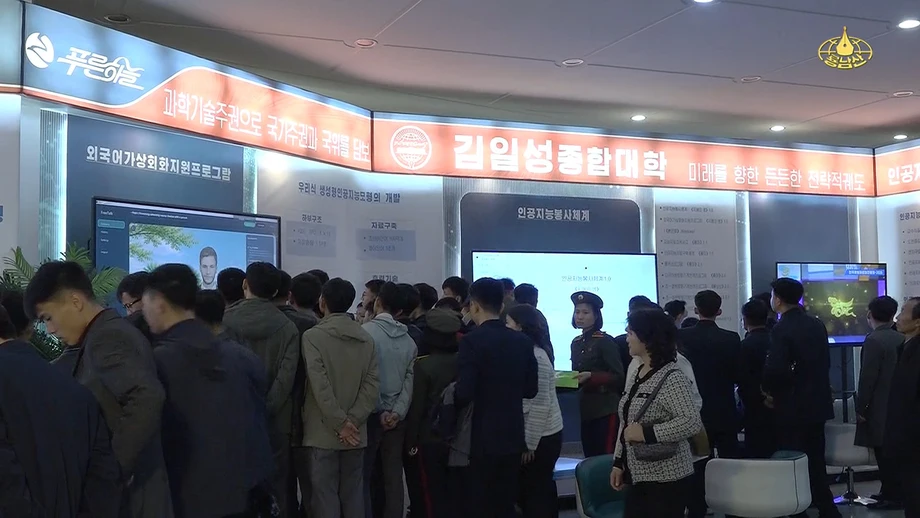
State television footage captured during the exhibition featured a prominent banner hanging near the developer booth. The banner displayed the phrase Development of our style generative AI model, utilizing terminology common in state rhetoric to claim internal creation and self-reliance. Observers note that while the user interface and local wrappers were programmed domestically, the core intelligence processing requires external open-source contributions.
Exhibition Debut and Broadcast Details
The National Exhibition of IT Successes served as the public launching pad for the conversational software. The exhibition took place in Pyongyang and ran from October 19 to October 30, bringing together software developers, university researchers, and state enterprises to display domestic digital achievements. Educational broadcaster Ryongnamsan TV aired a detailed segment about the exhibition on November 17, 2026, showing studio demonstrations and user interactions.
- October 19 to 30, 2026: The National Exhibition of IT Successes is held in Pyongyang.
- November 17, 2026: Ryongnamsan TV broadcasts footage of the chatbot.
- November 18, 2026: International analysts publish detailed breakdowns of the state broadcast.
Interface Design and Functional Capabilities
The conversational window mirrors the layout popularized by Western AI developers, featuring a new chat button and conversation history list on the left side of the display alongside a primary message window on the right. Users interact with the software by typing queries in either Korean or English. Demonstrations broadcast on state television showed the system successfully processing practical tasks, such as answering technical questions about generating electricity using natural energy, checking compatibility parameters for the Unity 2023.3.9 game engine, writing software building scripts, and offering medical advice on remedies for a headache.
Beyond answering technical questions, the software includes document summarization tools and translation functions. The technology behind the chat interface incorporates an automated classification step. When a user submits an input, the system displays an analyzing message while it categorizes the query to determine if it qualifies as a factual knowledge question before routing it to the core engine.
Strict Content Restrictions and Prohibitions
Usage of the conversational tool is strictly monitored through automated classifiers and explicit user warnings displayed directly on the screen. Below the active chat window, a prominent notice establishes boundaries for acceptable interaction. The interface prohibits queries that stray into social or political topics or contain uncultured language.
The system warning explicitly states that users must confine their inquiries strictly to technical and scientific subjects. The interface also places total legal and operational liability on the individual operator for any outcomes resulting from malicious utilization. This strict control framework ensures that the computational tool remains confined to technical encyclopedic tasks without serving as an open conversational agent.
Technical Architecture and Hardware Realities
Independent analysts examining the state television footage suggest that the system does not run on entirely self-developed artificial intelligence architecture. Building a generative model from scratch requires massive computational resources and specialized training data that remain largely unavailable inside the country. Technology researchers indicate that the brain of the chatbot is more likely built upon open weight models released by foreign laboratories, such as Google-developed Gemma or Alibaba-developed Qwen.
These open weight models provide foundational parameters that local engineers can fine-tune on modest personal computer hardware without requiring the massive server farms common in global technology hubs. However, the absence of large-scale domestic data centers creates a significant operational ceiling. This infrastructure gap will likely restrict the country from deploying the most advanced, high-parameter models currently operational in other parts of the world.
Broader Context of State Technology Utilization
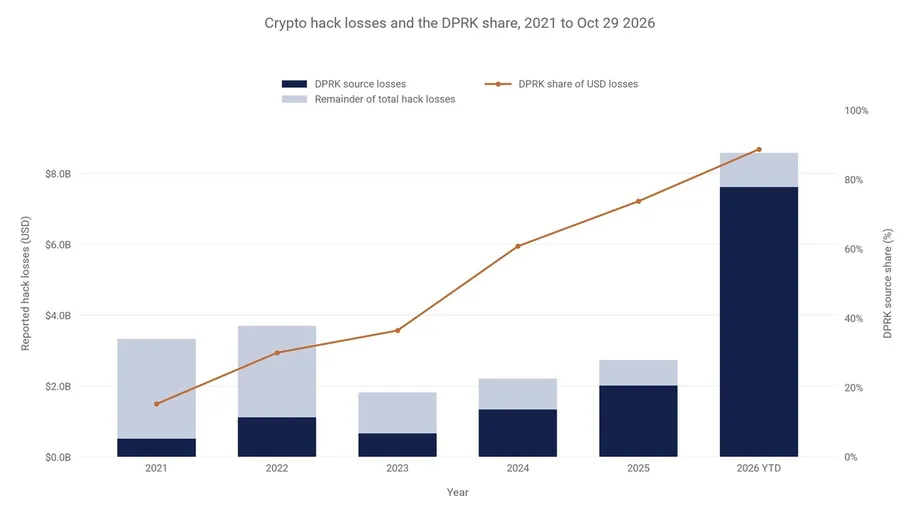
The public display of this conversational software aligns with a broader pattern of technological adoption by state-affiliated entities. International security researchers and cyber threat analysts have previously detected North Korean IT workers and hackers utilizing artificial intelligence tools to assist in writing code, planning operations, and executing professional tasks. Formalizing a domestic version allows researchers and students to interact with machine learning concepts within a controlled, state-monitored intranet environment.
Government authorities appear eager to embrace the capabilities of modern software engineering while maintaining absolute control over the information accessible to citizens. By wrapping open-weight foreign models inside a heavily restricted domestic interface, developers have created a localized tool that serves technical educational needs while blocking unauthorized external information.
The Bottom Line
- North Korea introduced its first domestic artificial intelligence chatbot, named Fountain of Wisdom, at an IT exhibition in Pyongyang.
- The software was jointly developed by Kim Il Sung University and software firm Phurunhanul Trading Company.
- The system accepts inquiries in Korean and English regarding science, technology, programming, and document summarization.
- Strict content filters prohibit political and social discussions, restricting output to technical knowledge.
- Analysts suggest the software utilizes open-weight models from foreign labs rather than a fully independent neural architecture.